
Why Fire Ant Mounds Keep Showing Up in The Woodlands
Red imported fire ants thrive in Southeast Texas. Warm soil, steady moisture, and plenty of sun create ideal conditions for these colonies to grow.
In The Woodlands, we start to see a noticeable increase in fire ant activity, including mounds around March and April. By May and June, it really takes off. That combination of rising temperatures and afternoon storms is a green light for colony expansion.
Fire ants also relocate constantly. If the nest gets too wet, crowded, or stressed, the ants move. Sometimes they split into multiple satellite colonies across the same yard.
That's why one fire ant mound suddenly becomes three.
What Does a Fire Ant Mound Look Like?
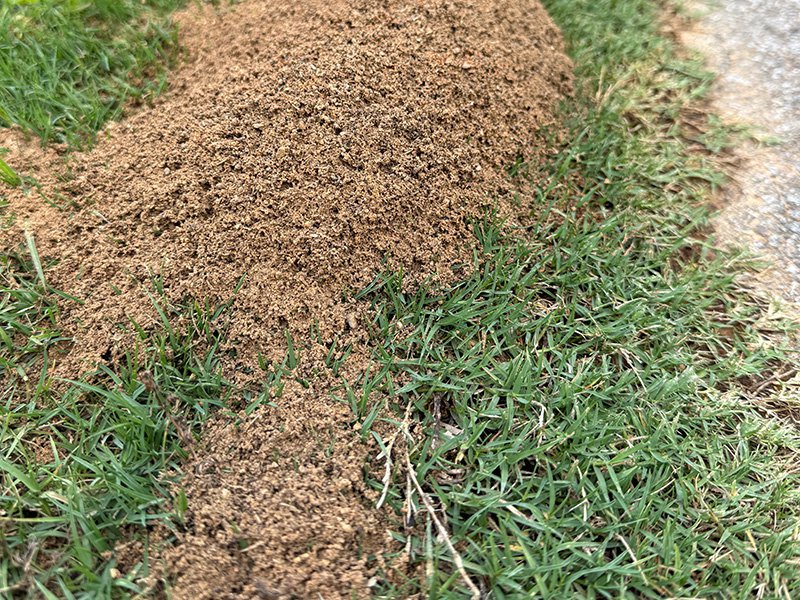
Fire ant mounds aren't the neat little ant hills you'd picture. They're irregular, dome-shaped piles of loose soil — some just a few inches tall, others close to 18 inches high and several feet across.
Here's the part that catches people off guard. Fire ant mounds don't have a visible entry hole on top. The ants come and go through underground tunnels that spread out from the mound. So even if the surface looks quiet, there can be tens of thousands of ants just below it.
If you're seeing loose dirt mounds near sidewalks or flower beds but aren't sure what they are, Marathon Pest Control can inspect your yard and confirm whether fire ants are active — before the colony spreads further.
Where Do Fire Ants Build Mounds Around The Woodlands Homes?
Signs of a fire ant infestation in The Woodlands usually start in the yard. But the mounds don't always pop up where you'd expect.
Sunny patches of lawn are the number one spot. Front yards, along sidewalks, near driveways — anywhere with open, sun-exposed soil and good moisture.
During inspections, our technicians commonly find mounds along fence lines, around landscape edging, and in flower beds where the soil stays soft and irrigated. In neighborhoods like Grogan's Mill and Panther Creek, where lots have more mature landscaping, we often see mounds tucked against tree bases or near retaining walls where moisture collects.
In newer developments with less shade cover, fire ant pressure tends to build even faster during summer. The open yards and fresh landscaping create ideal conditions.
And here's the one that surprises people — mounds right against the foundation.
Can Fire Ants Get Inside Your Home in The Woodlands?
Most people think of fire ants as an outdoor problem. Usually they are.
But when conditions change — heavy rain, extreme heat, disruption — colonies push closer to the structure. Sometimes they come inside.
We've had calls from homeowners in Sterling Ridge and College Park who found fire ants trailing along an interior wall or near a sliding glass door. That usually means the colony expanded close enough to the foundation that workers found a way in.
When mounds start appearing near the foundation, it's usually a sign the colony is moving toward the structure. That's something we recommend addressing early — before ants start trailing indoors.
If you're seeing fire ant mounds near the foundation or noticing ants trailing indoors after heavy rain, Marathon Pest Control can inspect the property and treat the infestation before it spreads further.
Why Over-the-Counter Fire Ant Treatments Don't Work
We hear this all the time from The Woodlands homeowners: "I've tried everything from the hardware store and they just keep coming back."
There's a reason for that.
Most over-the-counter products only reach the surface. They might kill the workers you can see, but the queen is deep underground — sometimes several feet down — still laying eggs. As long as she's alive, the colony rebuilds.
Some products actually make things worse. They cause the colony to split and relocate, which means you end up with more mounds instead of fewer.
A fire ant colony can have hundreds of thousands of members. A surface-level treatment doesn't come close to matching that scale.
Why Early Spring Fire Ant Treatment Matters in The Woodlands
In The Woodlands, fire ant activity tends to ramp up fast once warm temperatures and spring storms start lining up.
By March and April, colonies become much more active. Existing nests expand, and new colonies begin showing up across lawns, flower beds, and neighborhood common areas. Once late May and June storms arrive, mound activity can increase quickly.
That's why waiting until the yard is covered in visible mounds usually means you're already behind the busiest part of fire ant season.
Starting treatment earlier allows us to target colonies before they spread across the property. In many cases, homeowners who begin service in spring see far less mound activity around patios, play areas, sidewalks, and foundations during summer.
If you've already started noticing mound activity this spring, it's a good time to get ahead of it before summer conditions accelerate colony growth.
How Marathon Pest Control Treats Fire Ants in The Woodlands
Fire ants are covered under Marathon Pest Control's Basic Pest Control Plan — year-round protection against the most common pests in The Woodlands, Texas.
The plan also covers several other ants common to The Woodlands, including carpenter ants and crazy ants, as well as other house-infesting pests such as cockroaches, spiders (including brown recluse and black widow), earwigs, silverfish, crickets, centipedes, millipedes, and termites.
Our service starts with an initial inspection and treatment to address existing pest pressures. From there, a technician returns every quarter to treat around the exterior of the home — including any fire ant mounds in the yard. Interior treatments are available as needed.
We'll also knock down spider webs outside, remove wasp nests up to 15 feet high, and provide termite protection with the Sentricon® System. The plan is backed by Marathon's Pest-Free Guarantee, so if covered pests come back between scheduled visits, we'll return to re-treat at no additional charge!
Our plan starts at $47 per month.
If fire ants are showing up where your kids or pets play, near the patio where you entertain, or anywhere close to your home, don't wait for the problem to spread. Reach out, and we'll walk through what we're seeing.
Marathon Pest Control has been locally owned and family-operated since 2016. With over 20 years of industry experience and a 5.0-star rating from 142 Google reviews, our team knows the pest patterns in The Woodlands — and fire ants are near the top of that list.
FAQs About Fire Ants in The Woodlands
Are fire ant stings dangerous for dogs and cats?
Yes — especially for smaller pets that step directly onto a mound. Fire ants swarm fast and can sting multiple times. Most pets experience pain and swelling, but severe reactions can happen in some cases.
Can fire ants damage sprinkler systems or irrigation equipment?
Yes. Fire ants are attracted to moisture, so mounds often show up around sprinkler heads and irrigation boxes. Over time, colonies can build up inside those areas and interfere with the system.
Why do fire ants show up in newly landscaped yards?
Fresh landscaping creates ideal conditions — disturbed soil, new mulch, regular watering, and open sun exposure. Newly graded or replanted yards make it easy for colonies to establish quickly.
Can my neighbor's yard cause my fire ant problem to come back?
Absolutely. Fire ants regularly spread into nearby properties, especially when neighboring yards have untreated mound activity. That's one reason ongoing quarterly treatment helps prevent reinfestation.
Can fire ants survive flooding in Southeast Texas?
Yes. After heavy rain or flooding, fire ants often relocate instead of dying off. That's why homeowners in The Woodlands commonly see fresh mound activity appear after major storms.
Get Rid of Fire Ants in The Woodlands — Contact Marathon Pest Control
Fire ants aren't a problem that goes away on its own. If mounds keep popping up in your lawn — especially near the foundation, play areas, or where your family spends time outside — the team at Marathon Pest Control can help eliminate and prevent fire ants.
We serve homeowners across The Woodlands, Magnolia, Conroe, Montgomery, and surrounding areas. Contact us today to get started.
if(window.strchfSettings === undefined) window.strchfSettings = {};
window.strchfSettings.stats = {url: "https://marathon.storychief.io/en/how-to-get-rid-of-fire-ant-mounds-the-woodlands?id=679192671&type=26",title: "How to Get Rid of Fire Ant Mounds in The Woodlands Before Someone Gets Stung",siteId: "13867",id: ""};
(function(d, s, id) {
var js, sjs = d.getElementsByTagName(s)[0];
if (d.getElementById(id)) {window.strchf.update(); return;}
js = d.createElement(s); js.id = id;
js.src = "https://d37oebn0w9ir6a.cloudfront.net/scripts/v0/strchf.js";
js.async = true;
sjs.parentNode.insertBefore(js, sjs);
}(document, 'script', 'storychief-jssdk'))


