
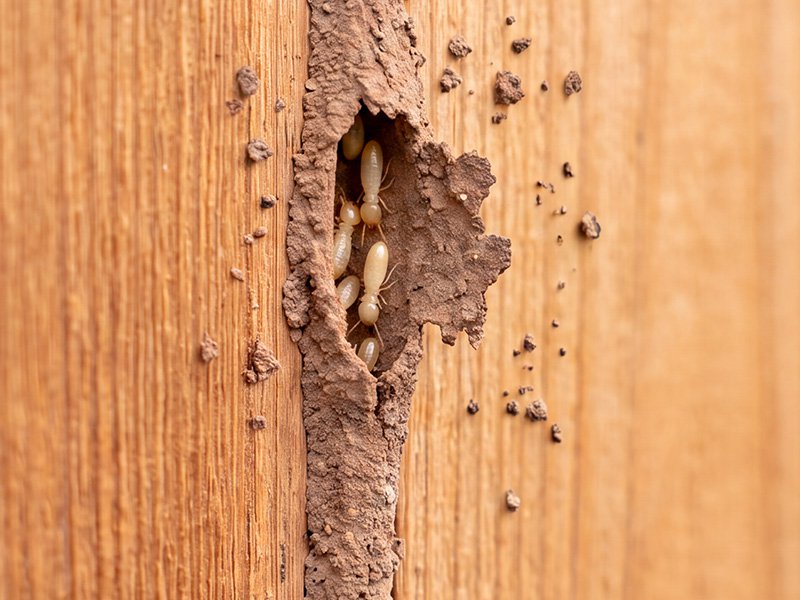
Why Were the White Bugs Hidden Behind Dirt Trails?
The dirt-like trails described by the homeowner were most likely termite mud tubes, sometimes called shelter tubes.
Subterranean termites live underground and need moisture to survive. To protect themselves while traveling between the soil and a food source, they build narrow tubes from soil, bits of wood, and termite secretions.
Most of the termites homeowners see are workers. These termites are pale, almost white, and spend nearly all of their lives inside wood or mud tubes. That is why many people describe them simply as white bugs.
When the homeowner brushed away part of the tube, the worker termites underneath were exposed. Mud tubes are one of several signs of termites that homeowners may notice around a property.
Why Would Termites Choose a Fence?
Termites can feed on wood fences, especially where posts or other wooden components contact the soil, and much of the activity can remain hidden inside the wood.
In this case, the fence happened to be where the homeowner first noticed the signs.
Moisture around the fence line can also help create conditions subterranean termites need as they move between the soil and wood.
According to Texas A&M AgriLife Extension, termites cost Texas homeowners hundreds of millions of dollars each year. With that in mind, signs of termite activity around fences, homes, and other wooden structures should be taken seriously.
Finding termites on a fence does not necessarily mean they recently arrived. They may have been feeding inside the wood for some time before the mud tubes or insects became visible.
Does This Mean the House Has Termites?
Not necessarily.
Finding termites on a fence does not automatically mean they have reached your home. However, the activity should not be dismissed simply because it appears far from the house.
Subterranean termite colonies forage through the soil in search of wood. The fence may be the only place they are active, or it may simply be the first place their activity has been noticed.
A professional termite inspection can check the fence, the home, and other accessible areas of the property for mud tubes, affected wood, wood-to-soil contact, moisture concerns, and other signs of termite activity.
Should You Brush Away the Mud Tubes?
Brushing away a mud tube may reveal live termites, but it will not eliminate the larger colony.
Spraying the insects you can see is also unlikely to solve the problem. It may kill some exposed workers while leaving the rest of the activity untouched.
If you discover white bugs beneath dirt trails on wood, take a few clear photos and, if possible, avoid disturbing the area further.
Leaving the area intact can help the technician see where termites were active and how they reached the wood.
What Should You Do Next?
Even if you only see termites in one section of the fence, an inspection can show whether there are signs elsewhere.
A professional termite inspection can determine:
- Whether the termites are limited to the fence.
- Whether there are signs of termite activity around the home.
- How extensive the termite activity appears to be.
- What type of treatment is needed.
That gives you a better idea of whether you are dealing with one affected fence section or a termite problem that also needs to be addressed around the home.
At Marathon Pest Control, our Sentricon-certified technicians inspect the property, explain what they find, and recommend treatment based on the conditions present. When termite control is needed, Marathon uses the Sentricon® System to address the colony and help protect the home.
Found White Bugs Eating Your Fence?
If you have found white bugs beneath dirt trails on your fence, it is worth checking whether the activity is limited to that area.
Marathon Pest Control provides termite inspections and termite control for homeowners in Tomball, Pinehurst, The Woodlands, and nearby communities. Contact Marathon Pest Control to schedule an inspection and find out whether treatment is recommended for your property.


